Types of Hotel

Criteria for Categorization of Hotel
–Standard Classification (Star
Rating System in India by HRACC)
–Size
–Location
–Clientele
–Duration of guest stay
–Level of services
–Ownership
–Alternative Accommodation
One Star Hotel
•These properties are generally small and independently owned, with a family atmosphere.
•There may be a limited range of facilities and the meals may be fairly simple. For example, lunch may not be served in room
•Some bedrooms may not have an en suite bath or shower.
•Maintenance, cleanliness, and comfort would be of an acceptable standard.

Two Star Hotels

•Hotels will typically be small to medium-sized, and offer more extensive facilities than
one-star hotels.
one-star hotels.
•Guests can expect comfortable, well-equipped overnight accommodation, usually with
an en suite bath or shower.
an en suite bath or shower.
•Reception and other staff will aim for a more professional presentation than at the
one-star hotel
one-star hotel
•Hotel will offer a wider range of straightforward services, including food and
beverages.
beverages.
Three Star Hotel
•Hotels are usually of fairly large size to support higher staffing levels as well as a
significantly higher quality and range of facilities than at the lower star
classifications.
significantly higher quality and range of facilities than at the lower star
classifications.
•Reception and other public areas will be more spacious, and the restaurant will
normally also cater to non-residents.
normally also cater to non-residents.
•All bedrooms will have an en suite bath and shower, and will offer a good
standard of comfort and equipment, such as a direct-dial telephone and toiletries
in the bathroom.
standard of comfort and equipment, such as a direct-dial telephone and toiletries
in the bathroom.
•Besides room service, some provisions for business travelers can be expected.
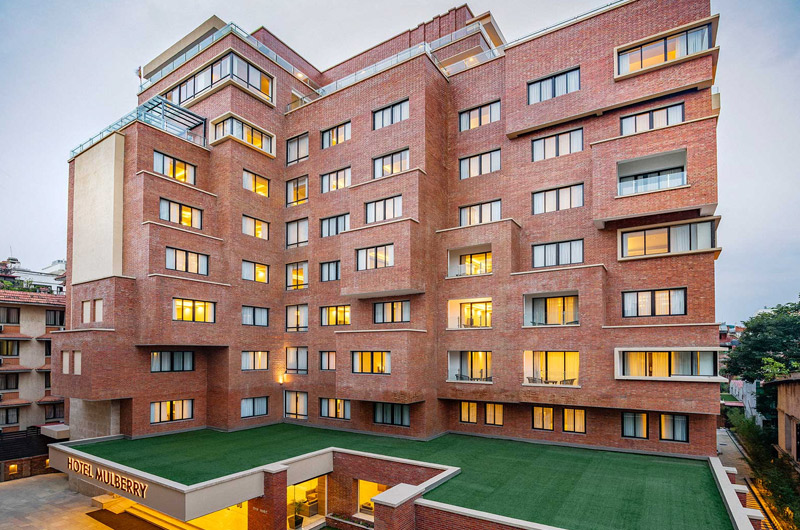
Four Star hotel
•Degree of luxury as well as quality in the furnishings, décor, and equipment
in every area of the hotel is out standing
in every area of the hotel is out standing
•Bedrooms will also usually offer more space than at the lower star levels.
•They will be well-designed with coordinated furnishings and décor.
•The en suite bathrooms will have both a bath and shower.
•There will be a high staff to guest ratio,
•There will be provisions of porter service, twenty-four-hour room service,
and laundry and dry-cleaning services.
and laundry and dry-cleaning services.
•The restaurant will demonstrate a serious approach to its cuisine.

Five Star and Five Star Deluxe Hotels
•Five star hotels offer spacious and luxurious accommodations throughout
the hotel, matching the best international standards.
the hotel, matching the best international standards.
•The interior design should impress with its quality and attention to detail,
comfort, and elegance.
comfort, and elegance.
•The furnishings should be immaculate.
•The service should be formal, well supervised, and flawless in its attention
to guests’ needs, without being intrusive.
to guests’ needs, without being intrusive.
•The restaurant will demonstrate a high level of technical skill.
•The staff will be knowledgeable, helpful, and well versed in all aspects of
customer care, combining efficiency with courtesy.
customer care, combining efficiency with courtesy.

Heritage Hotels
•Heritage hotels are properties set in small forts, palaces, or havelis, the
mansions of erstwhile royal and aristocratic families.
mansions of erstwhile royal and aristocratic families.
•They have added a new dimension to cultural tourism.
•They are of following three types:
–Heritage: This category covers hotels in residences, havelis,
hunting lodges, castles, or forts and palaces built between 1935
and 1950.
hunting lodges, castles, or forts and palaces built between 1935
and 1950.
–Heritage Classic :This category covers hotels in residences, havelis,
hunting lodges, castles, or forts and palaces built prior to 1935 but
after 1920.
hunting lodges, castles, or forts and palaces built prior to 1935 but
after 1920.
–Heritage Grand : This category covers hotels in residences, havelis,
hunting lodges, castles, or forts and palaces built prior to 1920.
hunting lodges, castles, or forts and palaces built prior to 1920.
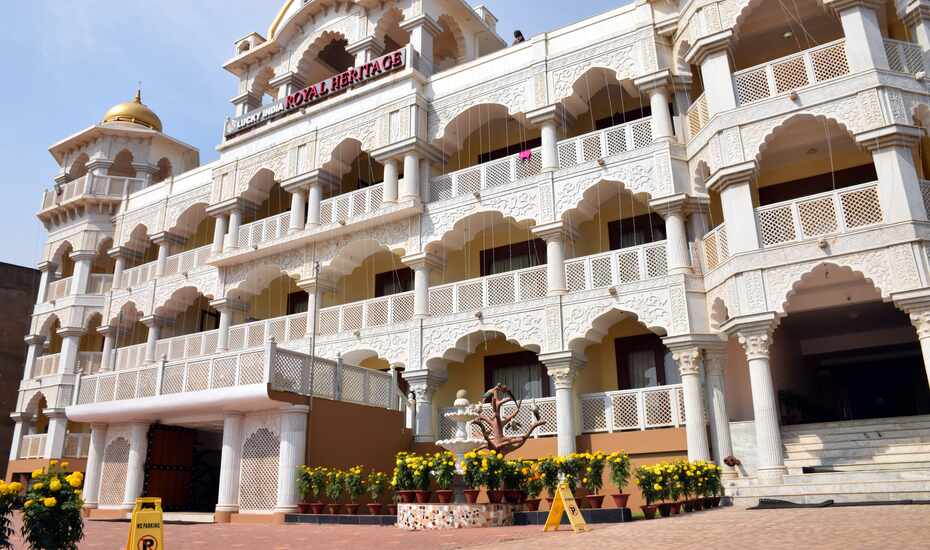
Classification of the hotels on the basis of size
•The number of guest rooms in a hotel is a criterion to classify hotels.
•Hotels can be grouped into the following categories on the basis of the
number of rooms:
number of rooms:
–Small Hotel : In India, hotels with twenty five rooms or less
are classified as small hotels, e.g., Hotel Alka, New Delhi and
The Oberoi Vanyavilas, Ranthambore. However, in the developed
countries of Europe and America, hotels with less than 100
rooms are considered small. These hotels provide clean and
comfortable accommodation but may not provide upmarket facilities,
such as swimming pool, restaurant, bar, etc.
are classified as small hotels, e.g., Hotel Alka, New Delhi and
The Oberoi Vanyavilas, Ranthambore. However, in the developed
countries of Europe and America, hotels with less than 100
rooms are considered small. These hotels provide clean and
comfortable accommodation but may not provide upmarket facilities,
such as swimming pool, restaurant, bar, etc.
–Medium Hotel : Hotels with twenty-six to hundred rooms are
called medium hotels, e.g., Hotel Taj View, Agra and Chola Sheraton
Hotel, Chennai. However, in developed nations, hotels with up to 300
rooms are termed medium-sized.
called medium hotels, e.g., Hotel Taj View, Agra and Chola Sheraton
Hotel, Chennai. However, in developed nations, hotels with up to 300
rooms are termed medium-sized.
–Large Hotel : In India, hotels with 101 to 300 guest rooms are
regarded as large hotels, e.g., The Imperial, New Delhi and The Park,
Kolkata. Whereas, hotels with 400–600 rooms are termed as large
hotels in the developed world.
regarded as large hotels, e.g., The Imperial, New Delhi and The Park,
Kolkata. Whereas, hotels with 400–600 rooms are termed as large
hotels in the developed world.
–Very Large Hotel : Hotels with more than 300 guest rooms
are known as very large hotels in our country, e.g., Shangri-La Hotel,
New Delhi and Leela Kempinski, Mumbai. In developed nations,
hotels with 600–1,000 rooms may be considered very large
are known as very large hotels in our country, e.g., Shangri-La Hotel,
New Delhi and Leela Kempinski, Mumbai. In developed nations,
hotels with 600–1,000 rooms may be considered very large
Classification of hotel on the basis Location
The location of the hotel is one of the major criteria for a traveler to select and patronize a
hotel. Hotels may be located in the city centre, sub-urban areas, natural locations such as
hill stations and sea beaches, near the port of entry into a country, etc.
hotel. Hotels may be located in the city centre, sub-urban areas, natural locations such as
hill stations and sea beaches, near the port of entry into a country, etc.
•They may be classified into the following categories on the basis of their location :
–Down Town Hotel : Located in the heart of the city
–Sub-urban Hotel : Located away from the hustle and bustle of city
–Airport Hotel : Located in the close vicinity of air port
–Resort : Located at exotic location like sea beaches, hills etc.
–Motel : Located along the highways
–Floatel : Located over the water bodies like lakes, seas etc. eg. Boat houses
floating over dal lake
floating over dal lake


Comments
Post a Comment